Tag: whitewater

  • NRS OUTLAW 1 Review

    NRS OUTLAW 1 Review

    Kayak Overview

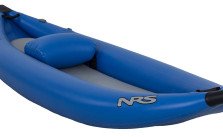
    Another inflatable kayak specifically made for whitewater. It’s stable, comfortable, and performs with excellence and most importantly of all, it’s affordable. The Outlaw is cheap considering it’s made for rougher waters, it’s a great alternative for people looking to get into whitewater rafting on a budget.

    See Best Price Blue

    The stability of the Outlaw makes it a great choice for beginners as well as professionals looking to get a whitewater kayak. The wide base provides a stable platform and the side tubes with their 10.5 inches makes it really hard for whitewater rivers to tip you over.

    The floor is made out of a 4 inches thick drop stitch material, this means you can inflate the floor a much higher air pressure, making it almost feel rock solid. It’s also much thinner than your average kayak floor, which lowers the center of gravity, while increasing the stability even further. The drop stitch floor is removable for easy cleaning.

    To make whitewater kayaking easier and more comfortable with the Outlaw, it’s recommended by NRS themselves to buy a set of thigh straps. The straps make it easier to control the kayak and will give you more leverage when paddling. Without the thigh straps, going down class 4 rivers can be quite difficult, so if you’re planning on going down some serious rapids, it’s highly recommended to buy thigh straps and foot braces.

    The 18 inch rocker on the stern and bow helps the Outlaw go over and through waves, but don’t expect to have any fun paddling this in the ocean, we’re talking about waves that occur in rough whitewater rapids.The rocker helps tremendously, making it easy to maneuver swiftly through difficult terrain.

    It comes with a thwart seat, if you’re unfamiliar with the term, it’s comparable to an inflatable square. The seat can be placed anywhere on the kayak, making it easy for you to find that perfect spot.

    The Outlaw is available in both solo and tandem versions, you’ll have to pay about $100 more to get the tandem version. They both come with a 3-year warranty.

    Features

    • 4 inch thick drop stitch floor
    • 18 inch rocker at the bow and stern
    • Optional flip strap on the seat

    Specifications

    • Dimensions: 118 inches in length (10 ft) , 37.5 inches (3 ft)
    • Capacity: 210 pounds
    • Weight: 26 pounds
    • Material: 1,000 Denier Drop Stitch Material

    Our Review

    [wp-review]

    See Best Price Blue

    This is the second whitewater inflatable kayak we’ve gotten to try. As we did with the first one, we brought along our expert friend John to help us try it out fully. We do want to brag a little and say that we did actually manage to complete go down a class 4 river without falling over last time!

    The cheap price tag is NOT justified (in a good way)

    The Outlaw is actually quite cheap compared with other inflatable whitewater kayaks like the Lynx, and other more expensive but similar quality kayaks. But does this low cost mean there’s a lack of quality or performance? To be honest, we weren’t exactly expecting the best inflatable when we tried it out, after all it was several hundred dollars cheaper. But we can now safely say we had a blast with it, there’s not too many things to complain about really.

    It’s very stable, even for beginners like us

    Right from the bat we noticed that the Outlaw is very stable in the water. The drop stitch floor combined with the large inflatable side tubes make it really easy to sit safely in the kayak. Even with larger waves we never felt like we’re about to fall over. It’s hard to describe but it’s almost as you ride on top of the water most of the time, instead of in it. It feels like you’re gliding forward with little effort, something our friend John really enjoyed. Combine the large rocker with the flotation, you have a kayak that will ride over the waves instead of going right through them.

    Drop stitch floor is a nice addition

    The floor is a separate piece, which means it can be removed from the actual kayak. A feature we really appreciate since it makes for easier cleaning. No more spending hours trying to get into the small crevices between the tubes and floor, thank god! The floor is also pretty thin, which puts you at a lower riding position, giving you more stability. Because it’s drop stitched it can be inflated up to 10 PSI without running the risk.

    Not versatile, stick to rivers!

    As you might expect from a whitewater kayak, it’s best suited for rivers. The Outlaw is not versatile at all, the bottom part is totally flat which makes for some pretty poor tracking. Without any skegs or bow and stern molds you’ll have an extremely hard time trying to go straight, and that’s on a calm day on a flat water lake… We don’t even want to imagine how hard it must be on a windy day.

    The thwart seat offers poor back support

    One thing we didn’t enjoy very much on the kayak was the thwart seat, it almost doesn’t provide any back support at all. We shouldn’t be very surprised though, as it’s basically a small inflatable box. John, the whitewater kayaker, told us however that the majority of seats for whitewater inflatables offer little to no back support. We were told that these seats are designed to be this way, they are much more functional and help with easy maneuvering. If you desperately need a seat with better back support it’s easy to replace the thwart seat with a higher seat.

    “Might” be too light for bigger water

    At the end of the day we asked what John thought of it. He loved it too, seems he was most surprised by the price rather than the actual performance. The only thing that bothered him was the size and weight. According to him, the size and weight makes it easy for bigger water to knock a beginner over. Funnily enough we didn’t feel the same, and that’s coming from two beginners. Maybe it’s all the years of experience John has or the fact that we’ve only tried one other whitewater inflatable.

    Pros

    • VERY affordable for a whitewater kayak
    • Lightweight and highly portable
    • Easy to maneuver and control in water

    Cons

    • Seats leave more to be desired
    • Tracks poorly (but who needs tracking in a whitewater river?)

    Conclusion

    If you’ve been contemplating about getting into whitewater kayaking but have been deterred by the high prices, give the Outlaw a chance. The price is very competitive but features and specs are pretty much the same as kayaks in that price range. It’s lightweight and highly portable, making it ideal in situations where your local whitewater river needs a little hike.

    If you want an affordable,  durable, lightweight and maneuverable whitewater yak, you’ve found it. Seriously, you can’t find a better kayak suited for whitewater at this price.
    See Best Price Blue

  • Aire Lynx 1 Review

    Aire Lynx 1 Review

    Kayak Overview

    Aire Lynx KayakThere aren’t a lot of inflatable kayaks out there that will allow you to go down a class 4 rapid. Most of the consumer level inflatables only go up to class 2 or class 3. That’s why we were super excited when we found out we had a chance to try the Aire Lynx 1 for a day on the local river.

    See Best Price Blue

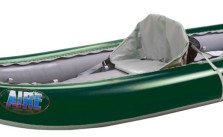
    The Aire Lynx 1 is an inflatable kayak designed for an all day adventure, not on the lake but on your favorite whitewater river of choice. It’s light with its 32 pounds of weight and will hold up to 350 pounds. As you can imagine, the hull of the Lynx 1 is super tough and will be able to withstand jagged rocks, sharp sticks and all other kinds of dangers you face every time you’re out on the water. The durability is all thanks to the material, which is made from 1,300 Denier, 22oz PVC coated polyester.

    When you purchase your Aire Lynx you will be able to choose from a closed-cell floor or the lighter and more compact, aire-cell floor.The closed-cell floor will give you better performance and a sturdier kayak. If you want your Lynx to be as best-performing as possible, opt for the closed-cell floor, it’s both easier to set up and cheaper, although slightly heavier. If you need to travel as light as possible, the air-cell floor is the better choice.

    Some reviews of this inflatable kayak state that you get a set of thigh-straps with your purchase, that is not the case and you will have to purchase them separately. It’s recommended to buy a set if you plan on paddling down rivers that go beyond class 2. The thigh-straps will make maneuverability and handling of the kayak twice as easy, letting you really dig in when you’re paddling.

    The Lynx 1 is first and foremost designed for whitewater, and should mainly be used for that, but if you want to do the occasional ride down a calm river or lake, it will do just fine. There’s also a tandem version called Lynx 2. It’s more or less the same watercraft as the Lynx 1, the major difference being how much it can carry and the size. They both come with a 10-year warranty, one of the longest warranty times we’ve encountered.

    Features:

    • Ability to choose between a closed-cell (hard) floor and an air-cell (inflatable) floor
    • Available in both solo and tandem versions
    • Flip-strap to flip the kayak back over if tipped

    Specifications:

    • Dimensions: 123 inches in length (10 ft) , 37 inches (3 ft)
    • Capacity: 350 pounds
    • Weight: 32 pounds
    • Material: 1,300 Denier, 22 oz PVC coated polyester

    Our Review

    [wp-review]

    See Best Price Blue

    We usually never paddle down whitewater rapids, at best we’ve gone down a class 3 river (which should really be classified as class 2). But when we were offered to try the Aire Lynx out for a day, we just couldn’t say no. To ensure that we could do a fair review we invited our friend, John, that’s been paddling whitewater rapids for more than 20 years.

    Closed-cell or air-cell floor?

    We chose the closed-cell floor because it is supposedly a lot more rigid and easier to handle. It’s also what everyone else is recommending whenever you bring up the Lynx. You should go for the air-cell floor only if you have to, if you travel a lot or just desperately need to keep it as light as possible for example.

    It feels safe thanks to the open sitting area

    Compared to other whitewater kayaks, the lynx puts you much higher up and works very much like a sit-on-top in this aspect. Because you’re sitting higher up you’ll have more leverage over the paddles, making it easier to maneuver. As we are complete beginners to whitewater kayaking, we felt really safe sitting in a open kayak. If we were to topple over, we wouldn’t get stuck inside the kayak and risk of potential injury. If you were to find yourself rolling down the river and need to flip your kayak back over, they’ve installed handles underneath the kayak to make this process a whole lot easier.

    Get yourself a pair of thigh straps to increase the control and maneuverability

    The open space does have it’s drawbacks, but it’s fixable. Because it’s wide open it’s much harder to control it with your body. We’re comparing them to hard shells, where you can use your whole to steer and maneuver it somewhat, this is just not possible in the Lynx. However, you can buy a set of thigh straps for the Lynx, this are quickly installed and will allow you to get that same amount of control you have in a hard shell.

    If you got the skills and experience, you can take it down a class 5

    Even though Aire has rated the Lynx up to class 4, we’ve spoken to professionals who told us it’s possible take a class 5 if you have the skills and experience. The large rocker really helps to dampen bigger falls which is also why so many kayakers prefer it for rough whitewater.

    Don’t buy the Lynx if you plan on anything else than whitewater

    We never tried to paddle the kayak in a lake or something calmer than the river, but from what we gathered talking to Lynx owners, it’s pretty much usable in all kinds of water conditions. Some even use it for week-long fishing trips and smaller day trips. Nothing wrong with that but in our opinion you’re better off with something else if you plan on doing a lot of longer trips, you should only buy the Lynx if you’re truly dedicated to whitewater kayaking.

    It’s really stable, even for complete beginners like me and my wife

    We had a blast trying (with emphasis on trying) to paddle down the local class 4 river. It was hard, mostly because we are beginners, but after a couple of tries we managed to get the hang of it. It felt really stable, even when there were smaller drops and large waves, we always felt safe while sitting in the Lynx. Not to mention our friend John, who seemed to fly down the rapids with this inflatable. To quote him, “Just amazing, I’ve played around with other inflatable kayaks out there but this one, this one is special. It’s just so stable, it makes everything feel ten times easier.”

    Pros

    • Really stable and rigid, even in rough whitewater
    • Large rocker makes going over and through waves easy peasy
    • Is very easy to maneuver and control

    Cons

    • Expensive compared to other whitewater kayaks
    • Not very versatile

    Conclusion:

    The Lynx inflatable kayak is made to withstand the toughest of whitewaters, you can bang against jagged rocks, sharp sticks and other rough surfaces, you won’t even scratch the surface. Thanks to the wide base and large side tubes it’s really stable, making it ideal for beginners looking to get into whitewater kayaking.

    Even though there are some people enjoying their Lynx during week-long trips, we highly recommend buying something else (an inflatable like the Straitedge) if you plan on doing a longer trips. The Lynx should mainly be enjoyed in a fierce whitewater rapid.

    See Best Price Blue